

Jookjangyeon
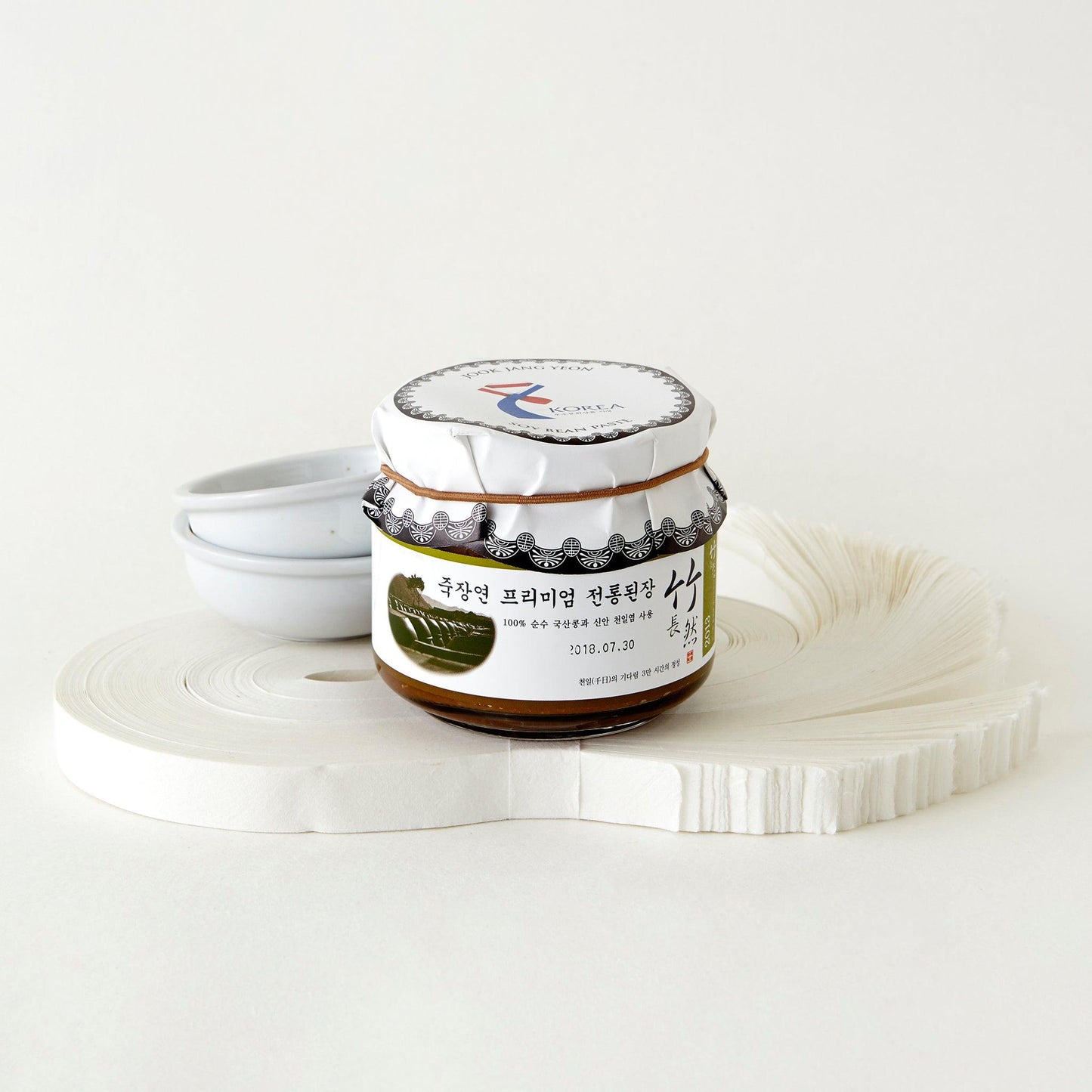
Premium Doenjang (Soybean Paste) (500g)
Premium Doenjang (Soybean Paste) (500g)
죽장연 전통된장
🚚 Ships from New York within 1 business day
Delivery in 0-5 business days
Couldn't load pickup availability
Highlights
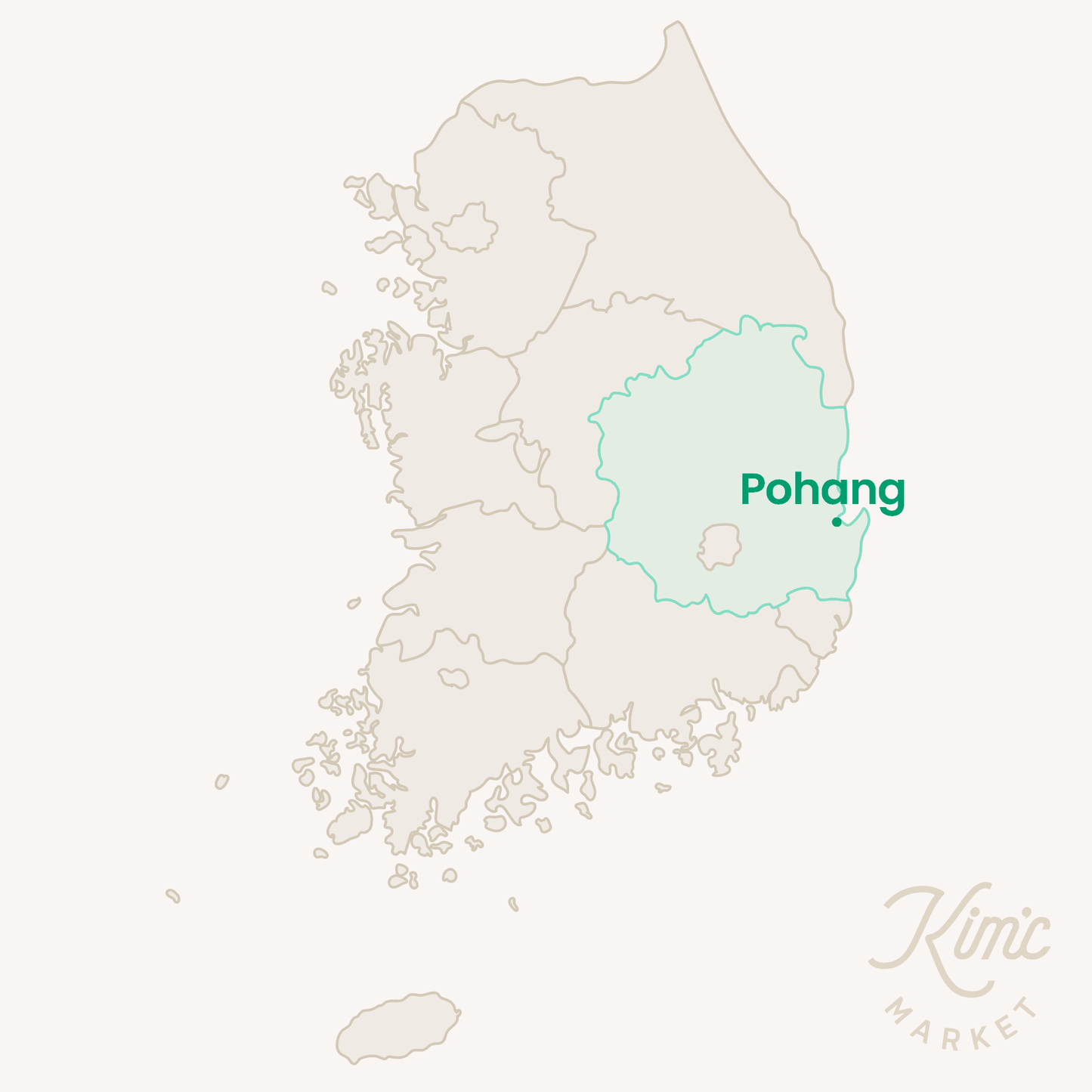
If your doenjang jigae has ever tasted flat or one-dimensional, it's probably because it was made in a factory, not a village. Jookjangyeon's doenjang is the real thing—fermented for 1,000 days in traditional earthenware, made in the mountain village of Sangsari, Pohang, by artisans who have been doing this for generations. Three ingredients, zero shortcuts, and the kind of deep, savory complexity that reminds you why Korean food has finally earned its place on the world's culinary stage.
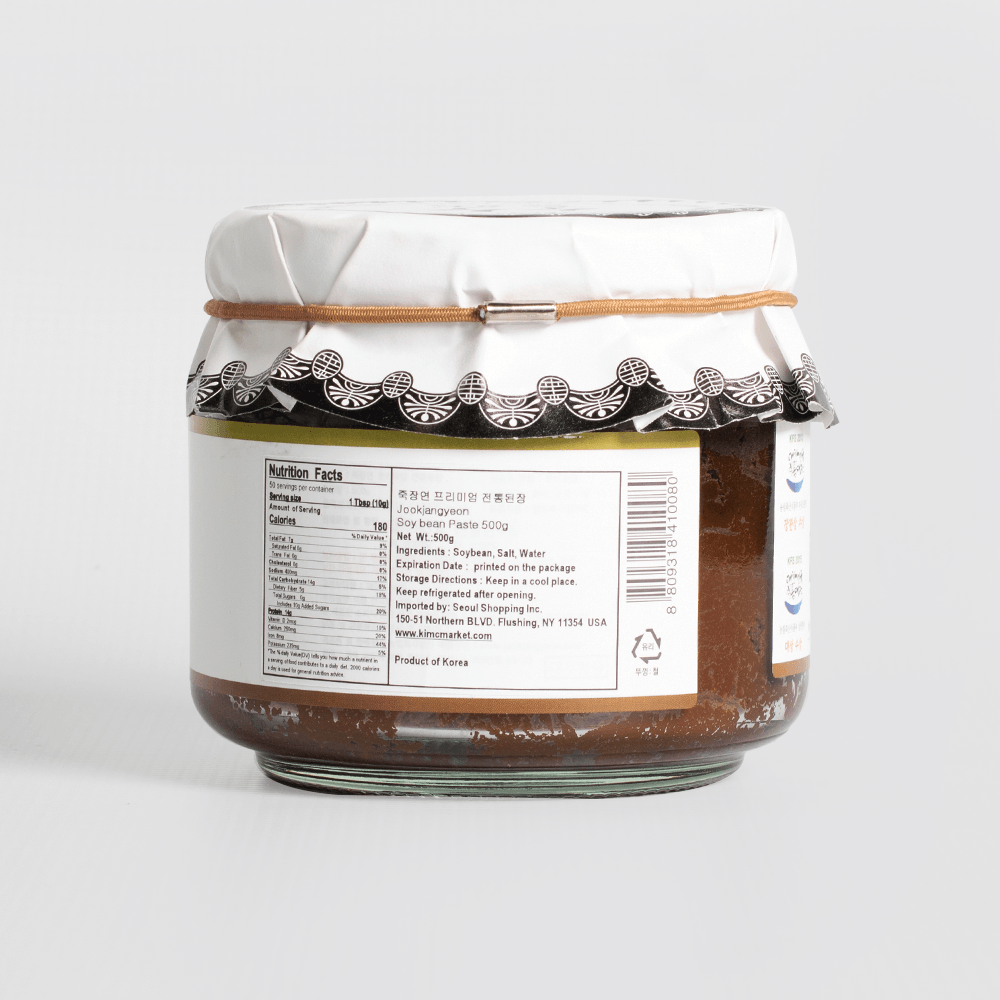
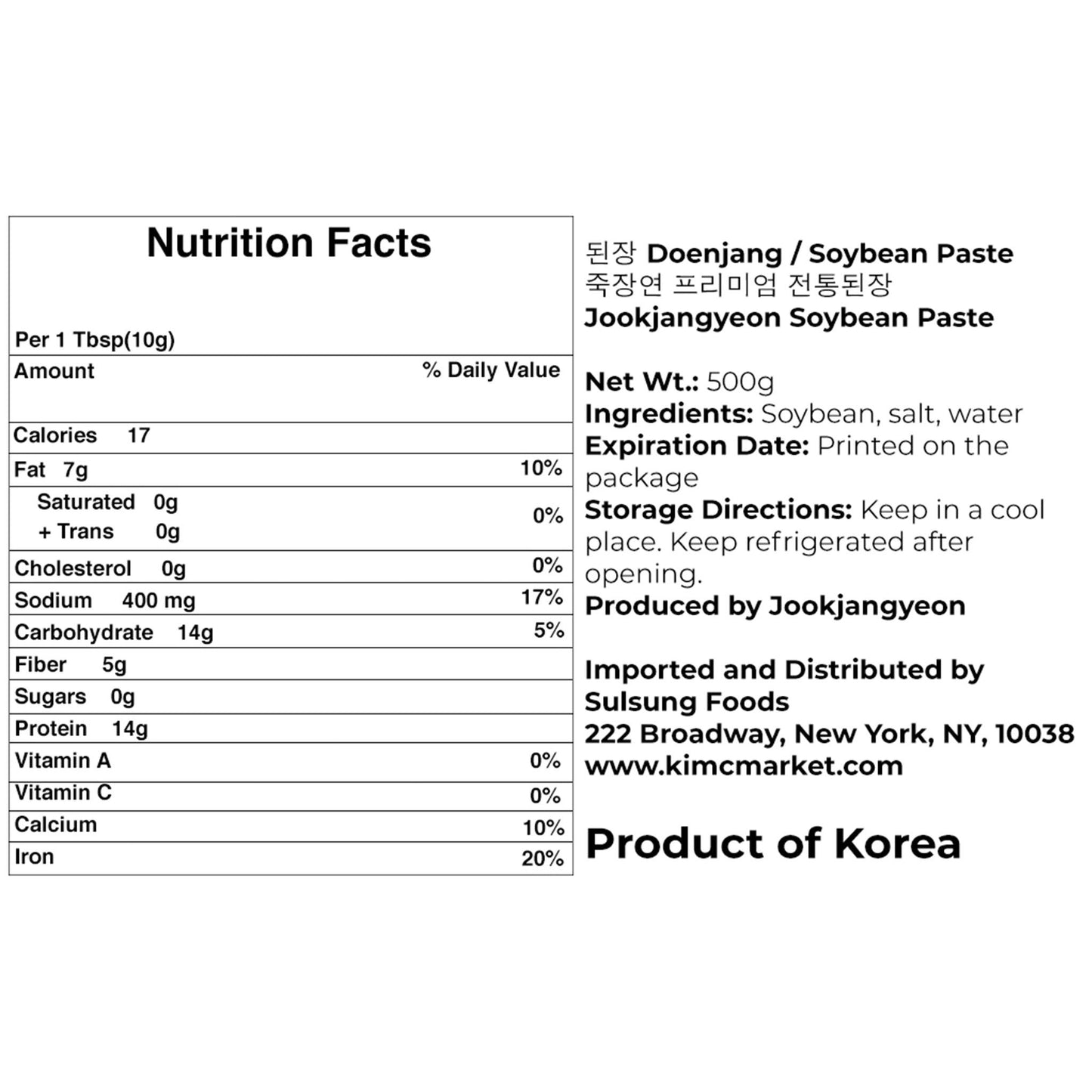
Ingredients: Fermented soybeans (100% Korean-grown), 3-year sun-dried sea salt (Sinan), bedrock water filtered through rock 200 m underground
Purity check: No MSG, no artificial coloring, no preservatives; vegan, gluten-free
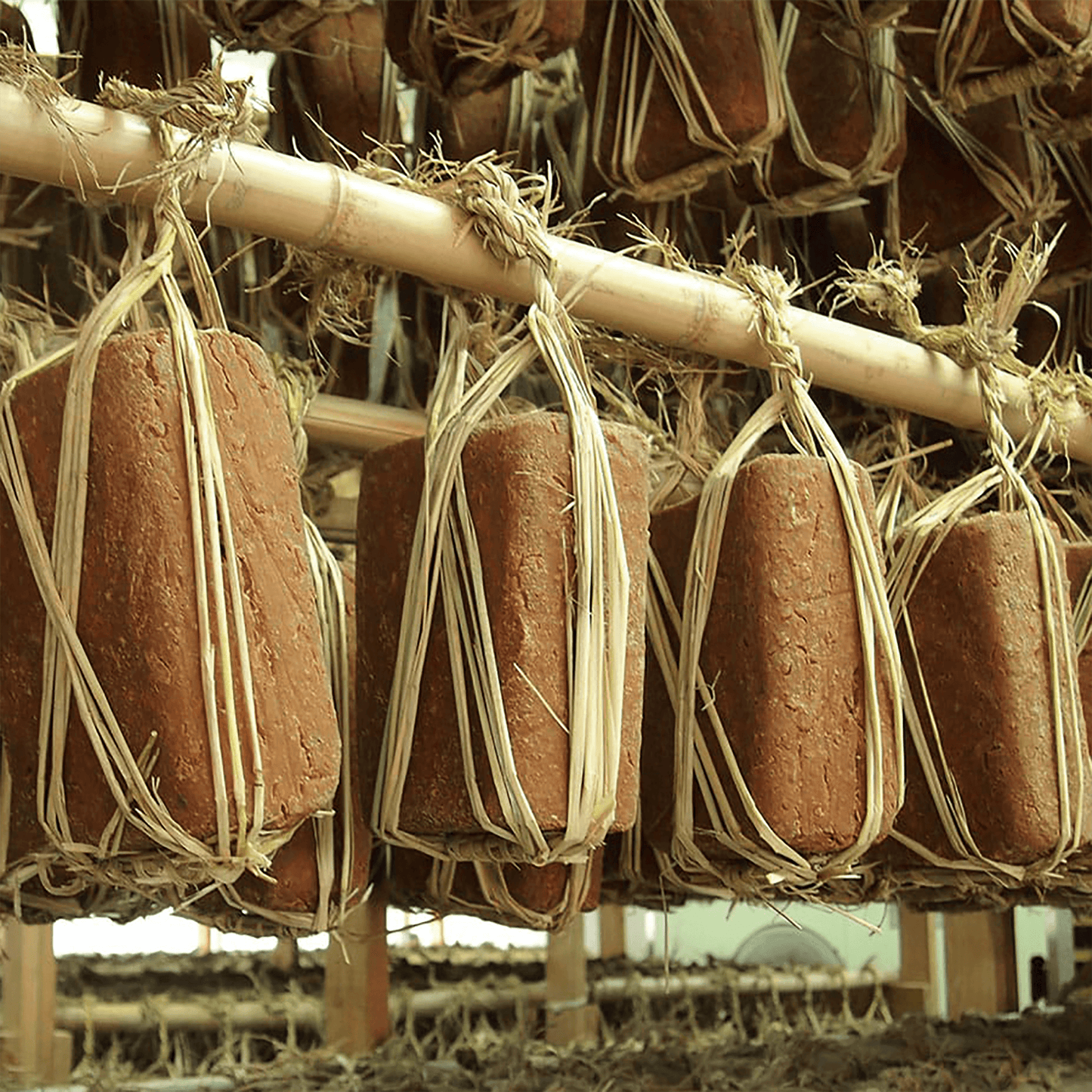
Process: Soybeans boiled in iron cauldrons over oak, hand-shaped into meju, fermented in hwangto (loess) rooms, then aged 1,000+ days in breathing onggi — only 1,000 jars a year
Net weight: 500 g (1.1 lb)
Storage method: Store in a cool, dry place; refrigerate after opening
Good to know: A living ferment — a white film may form on the surface and the jar may bubble or overflow a little. Both are natural signs of active fermentation; just skim the surface and carry on.
가장 정직한 된장 한 숟갈이 여기 있습니다. 포항 죽장면 상사리, 구암산 깊은 산골 마을에서 만들어지는 죽장연 전통 된장은 천 일이라는 시간과 세 가지 재료—국산콩, 신안 천일염, 암반수—만으로 완성됩니다. 화학 조미료도, 방부제도, 색소도 없습니다. 그저 자연과 시간이 빚어낸 깊고 진한 감칠맛이 있을 뿐입니다.
Description
A thousand days in the making
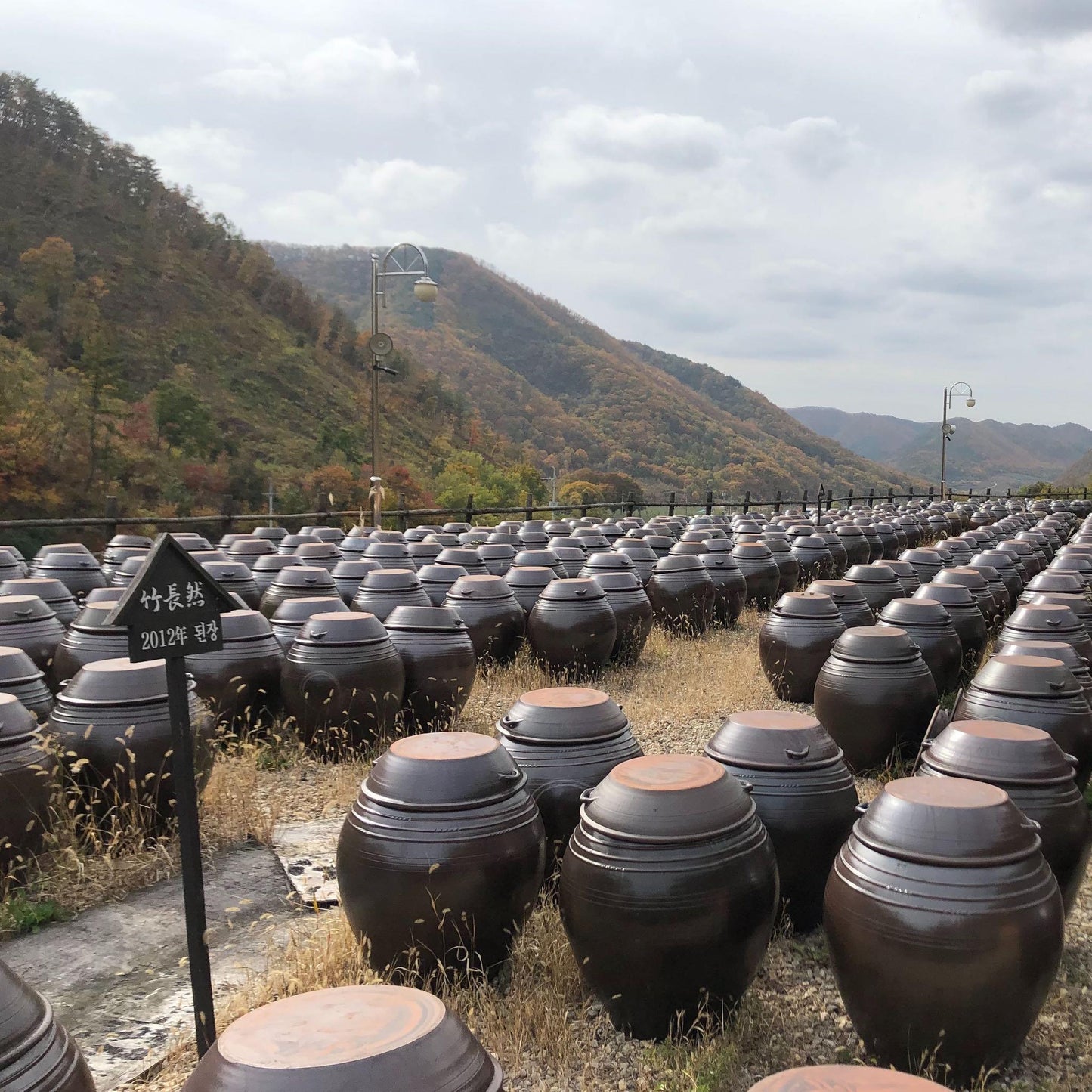
Sangsari, in Jookjang-eup, Pohang, sits deep in the Taebaek mountains — untouched by coastal humidity or industrial sprawl. The air is cold and clean, the soil mineral-rich, and 200 metres down flows bedrock water filtered through rock over centuries. The environment itself is the first ingredient. From there, Jookjangyeon takes no shortcuts: white-kernel soybeans grown over 200 days in the highlands are boiled in a cast-iron cauldron over oak firewood, hand-shaped into meju, and left to ferment in hwangto clay rooms. Three-year Sinan sea salt and the bedrock water are added, and everything is packed into breathing onggi handcrafted by Lee Mu-nam, a master potter recognized as an Intangible Cultural Heritage of Cheongseong County. After the early fermentation, the paste is separated — and then comes the real wait, at least two more years. Every January a new batch goes in; only 1,000 jars a year. Each carries the character of its season, so no two years taste exactly alike. That's the point.
The flavor that makes your jjigae sing
The taste is distinctly Korean but universally crave-worthy: deeply savory, gently salty, nutty, and layered with an umami that builds the longer you cook with it. It isn't sharp or harshly pungent the way commercial doenjang can be. It's rounded, confident, and a little complex — the way all great fermented foods are.
Ways to use it
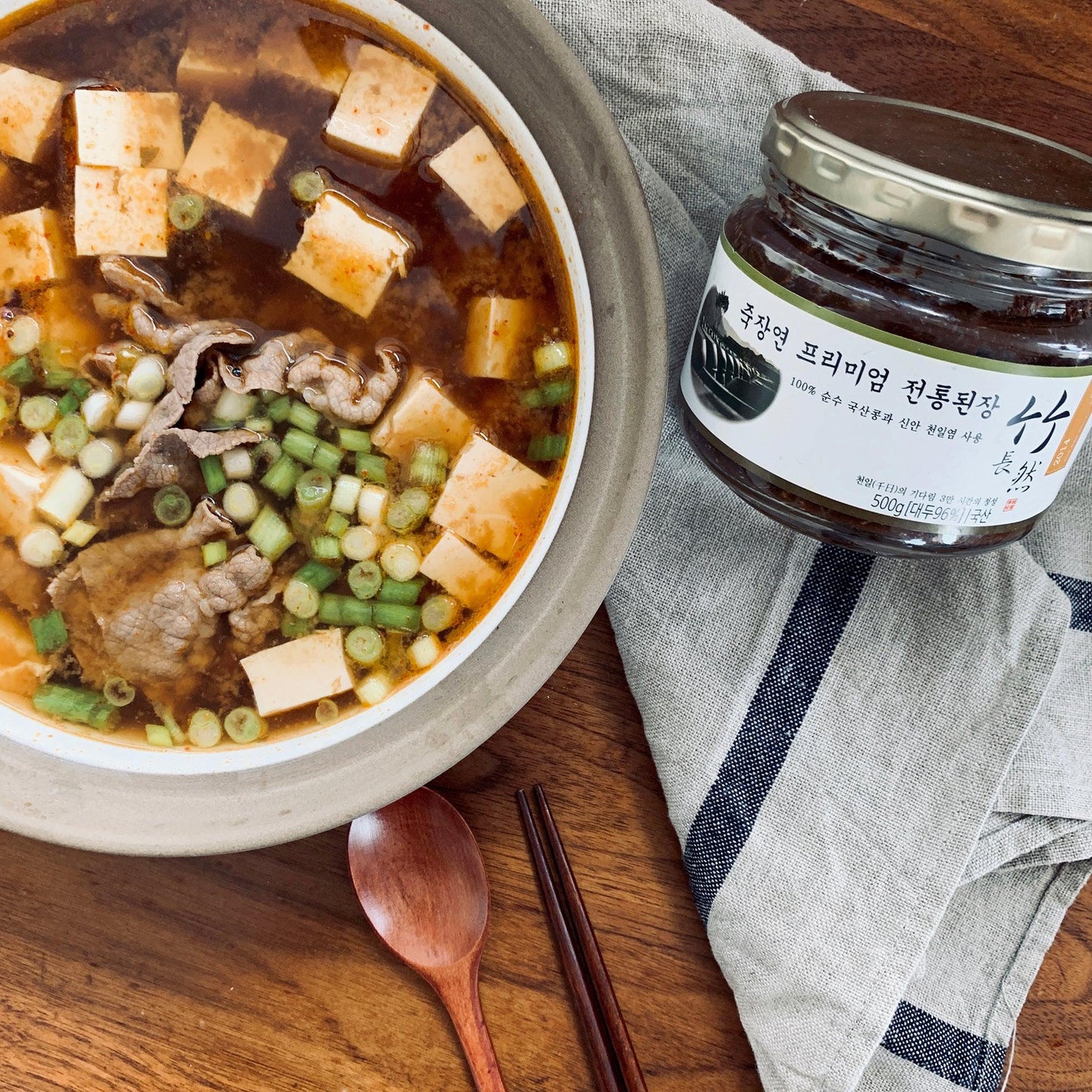
Doenjang jjigae is the natural starting point — somewhere between French onion soup and miso soup, but deeper than either. Start with a light anchovy or kelp broth, stir in a generous spoonful, and simmer slowly with tofu, zucchini, and mushrooms; it deepens with every minute and tastes even better the next day. Beyond the stew pot, it rewards experimentation. Mix it with sesame oil, garlic, and a touch of honey as an overnight marinade for pork belly or short ribs; toss a spoonful through warm roasted eggplant or zucchini; stir a little into a vinaigrette for a grain bowl; or blend it into softened butter with garlic for grilled corn. For a weeknight dinner that feels quietly sophisticated, use it as a glaze for salmon or pork tenderloin with ginger and honey, and roast until caramelized.
A note on storage: nothing to worry about
You may occasionally notice white surface mold developing on the paste. This is a completely natural result of active fermentation, not a sign of spoilage. Simply set the jar in indirect sunlight for a short time, skim the surface layer off, and carry on. The jar lid is intentionally not sealed tight, as the doenjang continues to ferment slowly. Some overflow can happen. That's a feature, not a bug.
천 일을 기다린 맛
포항 죽장면 상사리는 태백산맥 깊은 산중에 있어요. 해안의 습기도, 도시의 오염도 닿지 않는 곳이죠. 맑고 차가운 공기, 미네랄이 풍부한 흙, 그리고 수백 년에 걸쳐 암반을 통과하며 자연 정제된 지하 200m의 물. 이 환경 자체가 된장의 첫 번째 재료예요. 여기서부터 죽장연은 빠른 길을 택하지 않습니다. 고지대에서 200일을 자란 백태를 무쇠 가마솥에 참나무 장작으로 삶고, 손으로 메주를 빚어 황토방에서 발효시켜요. 3년 묵힌 신안 천일염과 암반수를 더해, 청송군 무형문화재 이무남 옹기 장인이 손으로 빚은 숨 쉬는 항아리에 담습니다. 초기 발효를 거쳐 장을 가른 뒤, 진짜 기다림이 시작돼요. 최소 2년입니다. 매년 정월에 새 항아리를 담그고, 연간 단 1,000항아리만 나옵니다. 저마다 그해의 개성을 품어, 두 해가 똑같은 맛일 수 없어요. 그게 바로 핵심이죠.
찌개를 살리는 한 숟갈
맛은 분명 한국적이지만 누구나 탐낼 만해요. 깊고 구수하며 은은하게 짭조름하고, 끓일수록 켜켜이 쌓이는 감칠맛이 있죠. 시판 된장처럼 날카롭거나 자극적이지 않아요. 두텁고 둥글며, 훌륭한 발효식품이 늘 그렇듯 조금은 복합적인 맛입니다.
이렇게 즐겨보세요
된장찌개가 가장 먼저 시도해 볼 요리예요. 프렌치 어니언 수프와 미소국 사이 어딘가에 있지만, 둘 중 어느 쪽보다도 깊죠. 멸치나 다시마로 가볍게 낸 육수에 한 숟갈 풀고, 두부·애호박·버섯을 넣어 천천히 끓이면 시간이 갈수록 국물이 깊어지고 다음 날엔 더 진해져요. 찌개 너머로도 활용이 넓습니다. 참기름·마늘·꿀을 조금 섞어 삼겹살이나 갈비 하룻밤 마리네이드로, 따뜻하게 구운 가지나 애호박에 한 숟갈 버무려 반찬으로, 비네그레트에 조금 풀어 그레인 볼에, 버터에 마늘과 섞어 구운 옥수수에도요. 평일 저녁을 근사하게 만들고 싶다면 생강·꿀과 함께 연어나 돼지 안심 글레이즈로 써서 카라멜라이즈될 때까지 구워보세요.
보관 시 참고사항: 흰 곰팡이가 생겨도 걱정 마세요
된장 표면에 흰 곰팡이가 생기더라도 걱정하지 마세요. 발효가 살아있다는 자연스러운 신호입니다. 햇볕이 드는 곳에 잠시 두었다가 윗면을 얇게 걷어내고 사용하시면 됩니다. 제품 뚜껑은 발효 가스 배출을 위해 밀폐되지 않게 제작되어 있으며, 발효가 활발할 경우 넘침이 생길 수 있습니다. 살아있는 발효식품의 자연스러운 모습입니다.
About
Jookjangyeon is not a factory. It's a village. Tucked into the mountain valley of Sangsari in Jookjang-eup, Pohang — a part of North Gyeongsang Province known for exceptionally clean water and cool air — it was founded on a single conviction: the best jang can only be made the old way, by the people who live closest to its ingredients. The artisans of Jookjangyeon are the residents of Sangsari themselves; they grow the soybeans, tend the onggi, and carry the knowledge forward not as a business plan but as a way of life. They use iron cauldrons and oak firewood, source their salt only from Sinan (sun-dried three full years to mellow its edge), draw water from 200 metres of bedrock, and ferment in breathing onggi made by master potter Lee Mu-nam. No MSG, no coloring, no preservatives — just 1,000 jars a year, each dated and tracked by vintage.
죽장연은 공장이 아니에요. 하나의 마을입니다. 경북 포항 죽장면 상사리, 유난히 맑은 물과 서늘한 공기로 알려진 곳이죠. 여기서 시작된 죽장연의 철학은 단순해요. 가장 좋은 장은 언제나 그 재료와 가장 가까이 살아온 사람들의 손에서, 옛 방식 그대로 나온다는 것. 죽장연의 생산자는 상사리 주민들이에요. 직접 콩을 키우고 항아리를 돌보며, 대를 이어 온 방식을 사업 전략이 아니라 삶의 방식으로 지킵니다. 무쇠 가마솥과 참나무 장작을 쓰고, 소금은 오직 신안에서 3년 묵힌 것만 씁니다. 물은 지하 200m 암반수, 발효는 이무남 장인이 빚은 숨 쉬는 옹기에서 이뤄지죠. MSG도, 색소도, 방부제도 없어요. 연간 단 1,000항아리, 저마다 담근 해로 기록됩니다.