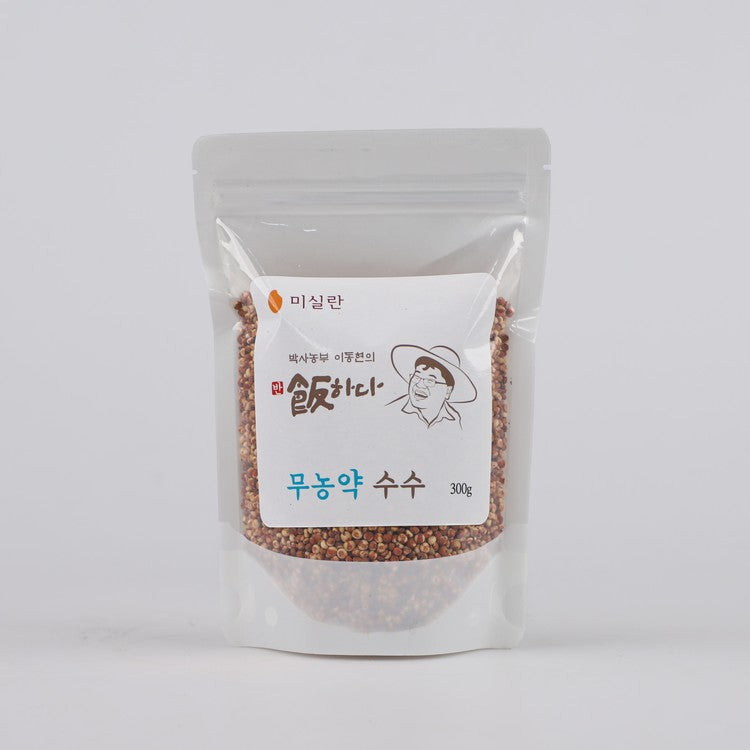


Misillan
Pesticide-Free Korean Red Millets
Pesticide-Free Korean Red Millets
무농약 찰수수
Dried grains and beans are shelf stable, and as such don't come with a sell-by date. The packing date is printed on the product—such products remain safe to eat indefinitely.
🚚 Ships from New York within 1 business day
Delivery in 0-5 business days
Couldn't load pickup availability
Highlights
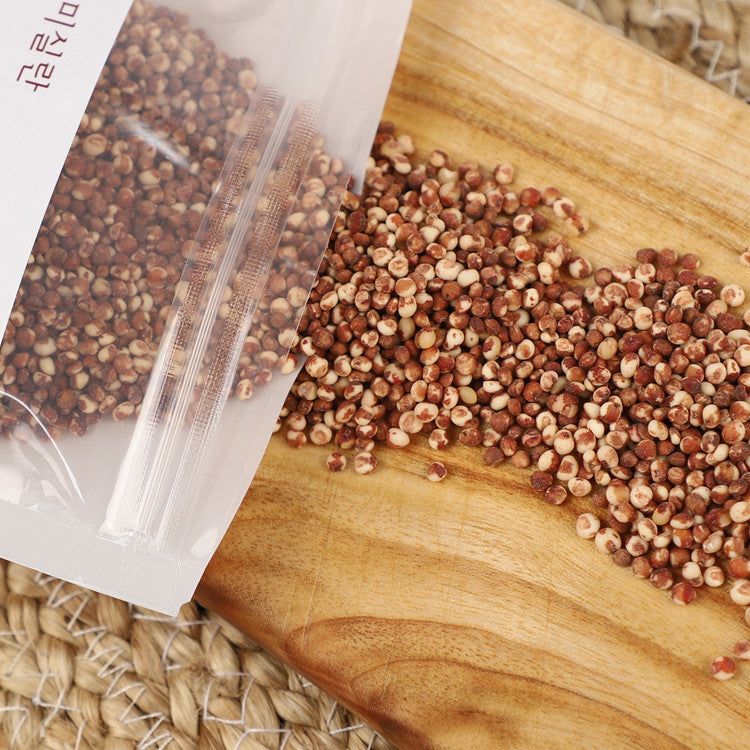
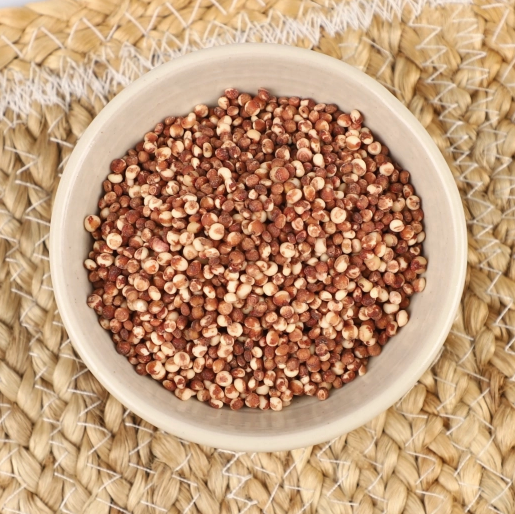
Glutinous sorghum is a deep, burgundy-red grain with a chewy, springy bite — closer to sticky rice than to a dry cereal grain. That color and chew are exactly what susu-patteok, the red-bean sorghum rice cakes served at a baby's first birthday, are made of. Misillan grows it in Korea, pesticide-free, and a spoonful in the rice pot brings warm color and a satisfying chew.
Ingredients: Korean glutinous sorghum 100% (pesticide-free, Korea)
Purity check: No additives
Certifications: HACCP
Net weight: 500g (1.1 lb)
Storage method: Store in a cool, dry place, away from direct sunlight and moisture; refrigerate after opening to keep it fresh
찰수수는 짙은 자줏빛이 도는 붉은 곡물이에요. 마른 곡물이라기보다 찹쌀에 가까운, 쫀득하고 탱글한 식감을 지녔죠. 돌상에 오르던 수수팥떡, 그 색과 식감이 바로 찰수수에서 나와요. 미실란이 국산으로 무농약 재배했습니다. 밥을 지을 때 한 숟갈만 넣어도 따뜻한 붉은빛과 쫀득함이 살아납니다.
Description
One of Korea's oldest grains
Sorghum — susu in Korean — is one of the oldest grains grown on the peninsula, long counted among the traditional grains cooked into ogokbap, the five-grain rice of the first full moon. This is the glutinous kind: deep burgundy-red, with a chewy, springy bite closer to sticky rice than to a dry cereal grain. Misillan grows it pesticide-free through Korea's four distinct seasons, keeping alive a heritage grain that has grown scarce on modern tables.
At the heart of Korean celebrations
Sorghum has long carried meaning as much as flavor. Its red color was believed to keep misfortune away, which is why susu-patteok — sorghum rice cakes rolled in red bean — became the cake made for a baby's hundredth day and first birthday. The same grain shapes gyeongdan (sweet rice balls) and bukkumi (pan-fried stuffed cakes), the treats of holidays and family gatherings.
How to cook it
Rinse the grains well before cooking; a quick wash carries off any surface bitterness and leaves the taste clean and nutty. Stir a spoonful into mixed-grain rice and it tints the whole pot a warm red while adding a springy chew. For something more traditional, steam it into rice cakes or shape it into gyeongdan.
가장 오래된 곡물 중 하나
수수는 한국에서 가장 오래 길러 온 곡물 중 하나예요. 정월대보름 오곡밥에 들어가는 전통 곡식이기도 하죠. 그중 찰수수는 짙은 자줏빛이 도는 붉은 알갱이예요. 마른 곡물이라기보다 찹쌀에 가까운, 쫀득하고 탱글한 식감을 지녔습니다. 미실란은 사계절이 뚜렷한 기후에서 무농약으로 길러요.
잔칫상의 중심에서
수수는 오래도록 맛만큼이나 의미를 지닌 곡물이었어요. 붉은색이 액운을 막아 준다고 여겼거든요. 그래서 백일과 돌상에는 팥고물을 묻힌 수수팥떡을 올렸죠. 경단과 부꾸미에도 같은 수수가 쓰여요. 명절과 잔칫날 상에 오르던 달콤한 떡들이죠.
이렇게 지어요
짓기 전에 깨끗이 헹궈 주세요. 겉면의 떫은맛이 씻겨 나가 맛이 한결 깔끔하고 고소해져요. 잡곡밥에 한 숟갈 섞으면 밥 전체가 따뜻한 붉은빛으로 물들고, 쫀득한 식감이 더해지죠. 좀 더 전통적으로 즐기려면 떡으로 쪄 내거나 경단으로 빚어도 좋아요.
About
Misillan is an agricultural company founded in 2005 by Dr. Lee Dong-hyun, a farmer-scientist who earned a master's degree at Seoul National University and a Ph.D. in Bio-resource Management at Kyushu University in Japan. A microbiologist with more than forty published papers, he founded Misillan on a single conviction — that the foundations of farming must not be allowed to erode — and he works in the field, not just the lab, applying his research to the food he grows. Rooted along the Seomjin River in Gokseong, South Jeolla, and drawing on the area's first-grade groundwater, the company grows and makes germinated brown rice, eco-friendly grains, and whole-grain foods, backed by grain- and microbe-related patents and certifications. Everything is HACCP-certified and organic-certified, built on the belief that good food begins with how the grain is farmed.
미실란은 농부 과학자 이동현 박사가 2005년 세운 농업회사법인입니다. 이 박사는 서울대학교에서 석사를, 일본 큐슈대학교에서 생물자원관리학 박사를 받은 미생물 연구자로, 40여 편의 논문을 발표했습니다. 연구실에만 머무르지 않고 그 연구 기술을 현장에 적용해 먹거리를 개발합니다. "농업 현장의 기반이 흔들려서는 안 된다"는 신념으로, 미생물과 곡물 관련 특허·인증을 바탕으로 건강하고 안전한 먹거리를 지속 가능하게 생산합니다. 전라남도 곡성 섬진강변의 자연 친화적 환경에 뿌리를 두고, 1급수 지하수로 발아현미와 친환경 잡곡, 농산물 가공식품을 만들며, 모든 제품은 HACCP과 유기농 인증을 받았습니다.